
16.06 / mo / 23:00

Pyotr Glavatskikh: «The Arrival of the Ship»

The Great Hall of the Perm Philharmonic

 A musical fantasy inspired by the writings of Khalil Gibran

Idea by Pyotr Glavatskikh
Directed by Vasily Pospelov
Lighting design by Nikita Chernousov

Performers:
Pyotr Glavatskikh – percussion
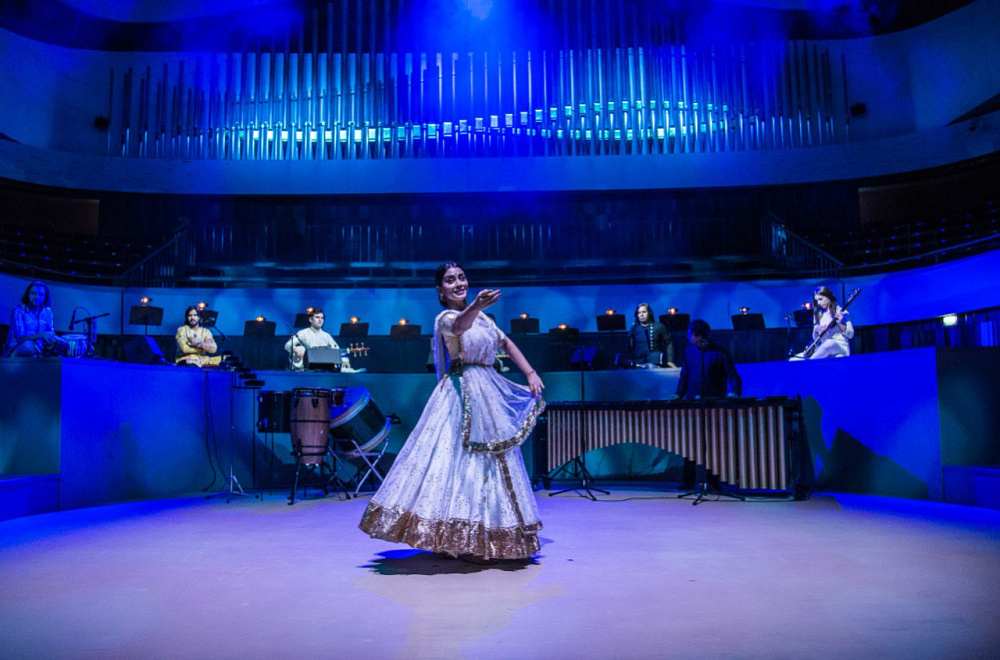
Shriya Saran (India) – narration and dance
Hindustani Ensemble
Weinberg String Quintet

On the programme:

Grigoriy Smirnov (1982)
Mirrors of Emptiness for marimba and delay effect (2008)

Hazrat Inayat Khan (1882–1927)
Suite from the music for the play Shakuntala, arrangement for string quintet by Vladimir Pol (1914)

Pyotr Glavatskikh (b. 1979)
Dedication to Khalil Gibran for solo percussion

Traditional Hindustani music
Traditional Kathak dance
Reading


16+
The Arrival of the Ship is a project by Pyotr Glavatskikh — a regular participant of the Diaghilev Festival, Moscow-based multipercussionist, composer, and producer. It is a musical homage to the Lebanese writer Khalil Gibran and his book The Prophet, written as a collection of philosophical prose poems. At the heart of the parable lies the idea of the fundamental unity of religions. Pyotr Glavatskikh’s project is also based on unification — not of faiths, but of cultural traditions and musical worlds.

Bollywood actress Shriya Saran dances in the traditional Indian Kathak style and reads excerpts from Khalil Gibran’s book in English. Ildar Khabibullin, soloist of the Hindustani Ensemble and a master of traditional Indian vocal music, performs and reads the Russian translation.

In dialogue with the classical North Indian Hindustani tradition are works by the legendary philosopher and musician Hazrat Inayat Khan. In 1913, he lived in Moscow for seven months, performing Indian classical music and spreading his original philosophical ideas. Russian musicians helped him publish the collection Songs of Hindustani, which included Indian melodies arranged for piano. Some of them, in arrangements for string quintet, became part of the mystery ballet Shakuntala, staged by Alexander Tairov in 1914. Alongside fragments from this ballet, the program includes Grigory Smirnov’s Mirrors of Emptiness and a new percussion piece by Pyotr Glavatskikh inspired by Gibran’s writings.
all tickets sold out